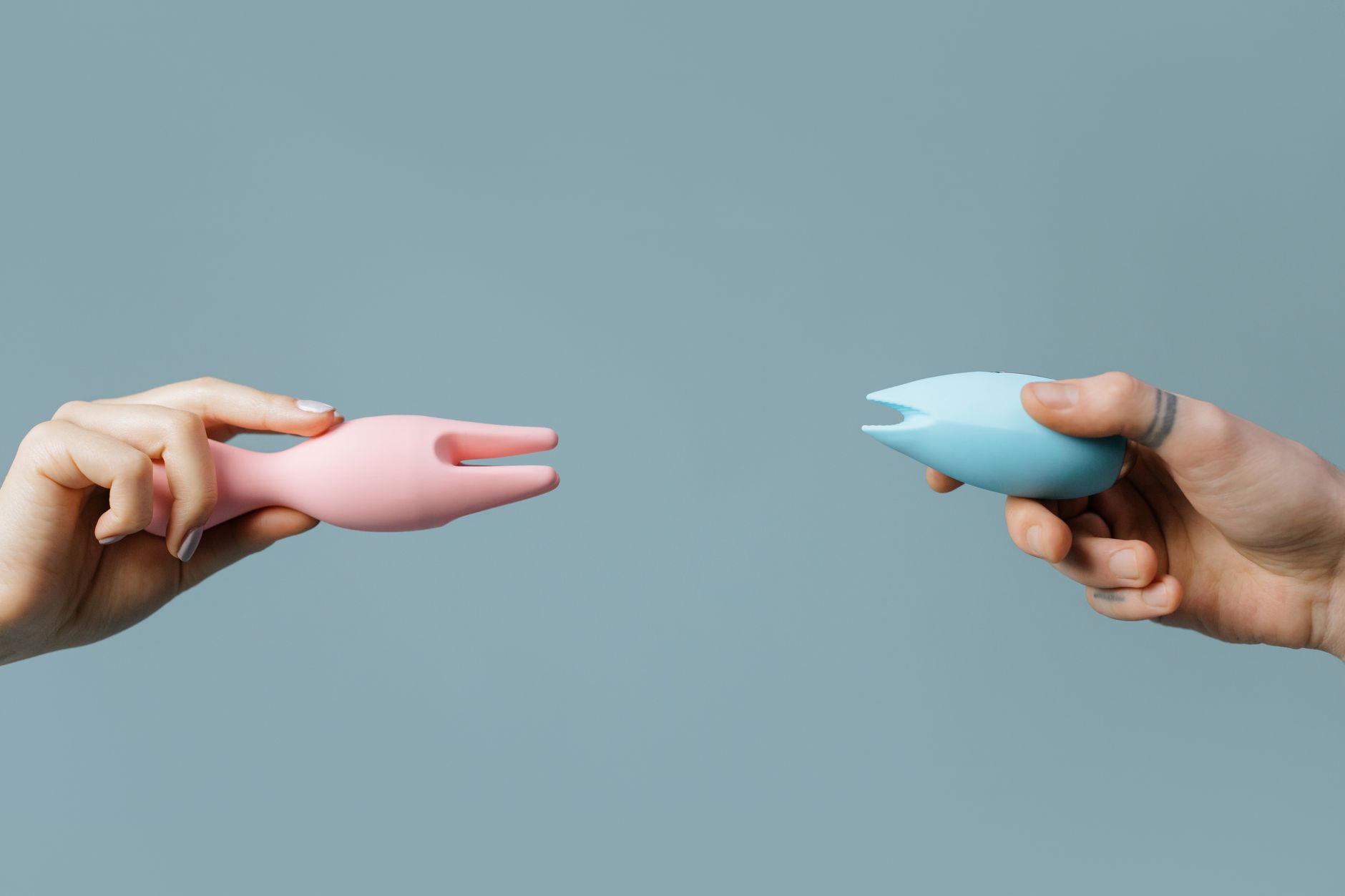
Let's talk about what distance actually does
Long-distance relationships change your nervous system. Not in some abstract, spiritual way, but in measurable physical ways. Arousal requires a certain kind of safety and presence that proximity provides, and when your partner lives 500 miles away, your brain knows it. Your body responds accordingly.
You're not broken. You're not less interested. You're operating under different conditions, and lemon vibrators—specifically lemon clitoral vibrators like those air-suction devices—work differently in that context than they might in a geographically close relationship.
The intimacy gap is real (and neurological)
When someone you're attracted to is in the room with you, your amygdala and your nervous system register safety cues. Body heat, scent, the hum of another person breathing. Your pituitary gland starts releasing oxytocin. Arousal becomes easier because your nervous system isn't trying to maintain hypervigilance about distance and absence.
Long-distance removes those ambient cues. You lose the casual touch, the ability to read their mood from body language, the physical reassurance that they're actually there. What remains is intention. You have to decide to be present, to undress mentally and physically on a schedule, to create intimacy without the organic momentum that proximity gives you.
Some couples find that this structure actually deepens things. But it rewires how your body responds to pleasure in the interim.
Why lemon vibrators feel different when you're apart
There are three main shifts that happen:
First, activation takes longer. In a close relationship, sexual desire often builds gradually throughout the day—a text, physical proximity, the hum of shared space. In long-distance, arousal has to be more deliberate. Many partners report needing 15-20 minutes of intentional buildup (video call, sexting, mental focus) before their body is ready to engage with a lemon vibrator or any toy. This isn't a bug. It's just different neurochemistry.
Second, the sensation feels less integrated with partnership. When you use a lemon clitoral vibrator while your partner is present (or in the room with you), pleasure registers as collaborative. Your nervous system recognizes it as part of shared intimacy. Alone, even if they're on a call with you, pleasure feels more isolated. Some people describe it as more intense because of that solitude. Others find it emotionally harder.
Third, the toy becomes a bridge rather than an accessory. In long-distance, lemon sexual toys shift from being something supplementary to being a primary way you stay embodied and connected to yourself. That's a different psychological weight, and your nervous system knows the difference.
What helps when you're using a lemon vibrator solo
If your partner is far away and you're exploring pleasure on your own, these adjustments matter:
Build ritual around it. Set a specific time. Light a candle. Put the phone down first, then pick it back up if you want to video call. The ritual signals to your nervous system that this is intentional, not desperate. It's the difference between scheduled sex and spontaneous sex, and your body responds better to both when they feel chosen.
Start slower than you might expect. A lemon clitoral vibrator's intensity can feel overwhelming if you're not fully activated. Begin on lower settings—pattern 1 or 2 on the Lem, for example. Let your body dictate the pace. This is especially true if you're feeling the emotional weight of distance alongside the physical.
Use lemon vibrators as a tool for self-connection, not substitution. The best long-distance couples I work with treat solo pleasure differently. They're not trying to recreate partnered sex. They're reconnecting with their own arousal, their own capacity for sensation. When your partner comes back (or when you visit), that self-knowledge matters.
Video calls change the game. There's something about being watched, even through a screen, that activates differently than being alone. If you're comfortable with it and your partner is present, that shared attention can bridge some of the neurological gap. If not, that's completely valid too.
The emotional piece (which matters more than the physical)
Long-distance fundamentally changes your relationship to your own body. You lose the casualness of physical intimacy. Sex becomes scheduled, planned, sometimes watched or coordinated. That either deepens your capacity for intentionality or makes it feel like a performance. Often both.
If you find that using lemon adult toys alone feels emotionally harder since your partner left, that's not a sign the toys aren't working. It's a sign you're grieving the physical presence of someone you want. That grief is real and valid and completely separate from whether a lemon clitoral vibrator