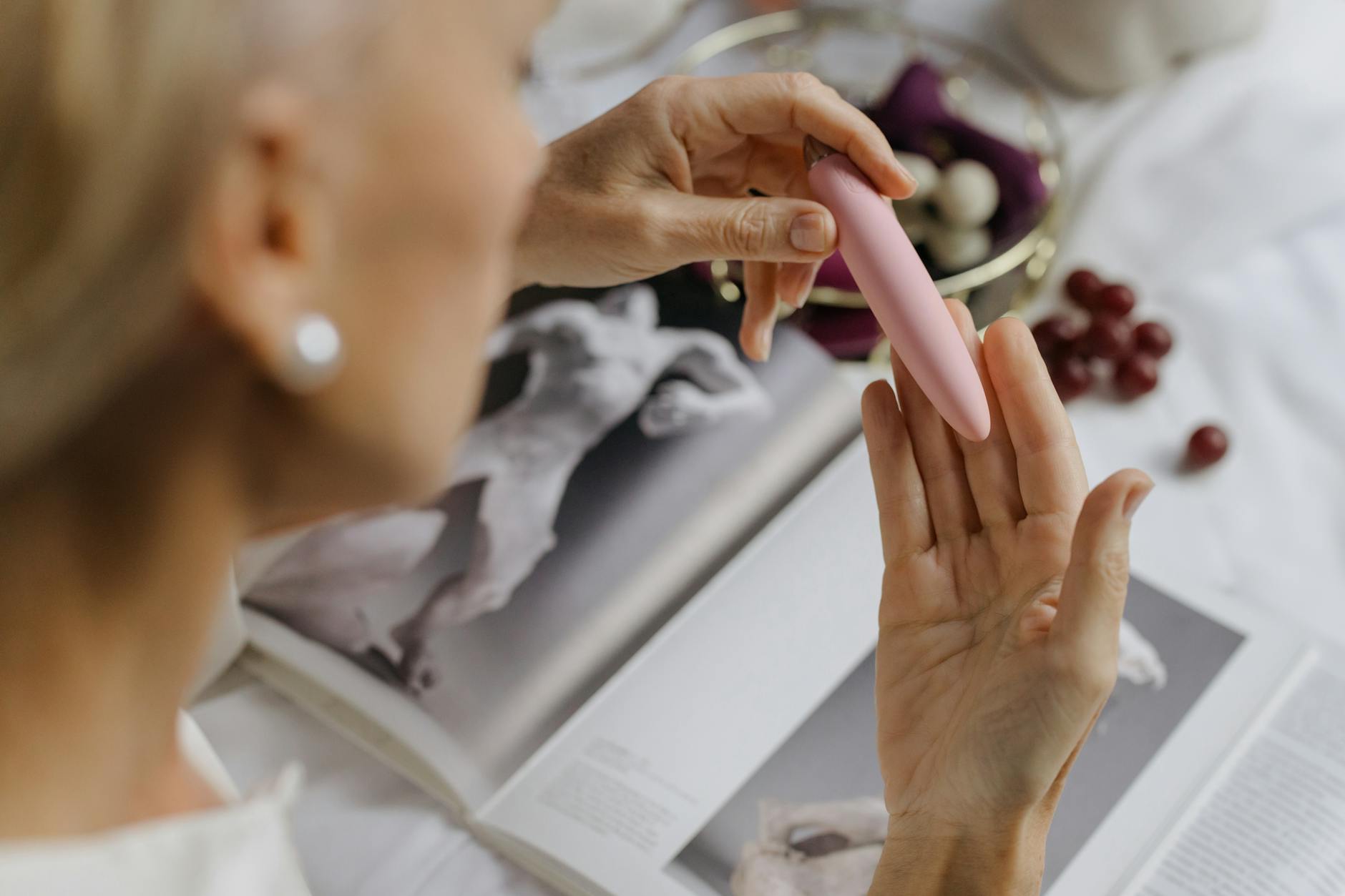
Here's what nobody tells you about hormonal IUDs and pleasure
You got your IUD placed, maybe felt a bit of cramping, and then life went on. But if you've noticed that your usual rhythm with a lemon vibrator feels different now, you're not imagining it. Hormonal IUDs release a synthetic progestin directly into your uterus and bloodstream. That changes things. Not everything. Not permanently. But it changes them.
The shift is rarely dramatic. Most people don't wake up one day unable to feel pleasure. Instead, it's subtler. Your Lem might need two extra minutes to build momentum. Your arousal pattern might feel flatter. Or your orgasm might arrive, but with less intensity than you remember. These aren't failures. They're your body responding predictably to a hormonal shift.
How hormonal IUDs alter arousal at the physical level
The progestin in a hormonal IUD (like the Mirena, Kyleena, or Skyla) is released in steady, tiny doses. Unlike hormonal birth control pills, which send hormones through your whole system and then leave your body, an IUD keeps working the same way month after month. Your body doesn't get a break. This steady state affects arousal in three specific ways.
First, progestin suppresses estrogen slightly. Estrogen is a major player in vaginal blood flow. Less estrogen means less engorgement during arousal, which means the tissue doesn't swell the same way. For some people, this means the clitoris isn't as prominent when stimulated. A lemon clitoral vibrator that relied on that engorged tissue for perfect positioning might need a slight angle adjustment.
Second, progestin can lower dopamine in some people. Dopamine is tied to desire and anticipation. If your baseline desire feels muted, that's often why. You're not broken. Your brain chemistry is genuinely calmer than it was before the IUD.
Third, the IUD itself can affect pelvic sensation. Some people report that their orgasms feel more localized or less full-body. Others say the uterine contractions during orgasm feel different because the IUD is literally in the way. This isn't pain. It's a change in the architecture of sensation.
Why your arousal timeline might have stretched
One of the most common shifts I hear from people using lemon vibrators with a hormonal IUD is that warm-up takes longer. What used to take five minutes now takes twelve. What used to build steadily now plateaus midway through. This matters because pleasure isn't just about the destination. If your ritual has always been quick and efficient, an extra seven minutes might feel frustrating rather than luxurious.
The reason is straightforward. Progestin favors stability over stimulation. It's literally designed to create a less hospitable environment for sperm (thicker cervical mucus, slower fallopian tube contractions). That same calming effect reaches your nervous system. Your parasympathetic nervous system (the "rest and digest" branch) gets a gentle boost. Your sympathetic nervous system (the "go go go" branch) gets quieted. In evolutionary terms, this makes sense. Progestin prepares the body for potential pregnancy, and pregnancy is metabolically expensive. So the body downregulates excitement.
For someone using an air-suction lemon vibrator, this might mean you need pattern two instead of pattern one to feel the same build. Or you might need to extend your session from ten minutes to fifteen. This is not a problem. It's just information.
The numbness question: is it the IUD or something else?
Some people report decreased sensation altogether on a hormonal IUD. They feel less, period. Not just slower arousal, but actual numbness. Here's the thing: this is rare as a direct IUD effect, but it does happen for a subset of people, and it's worth investigating.
Before you blame the IUD, check three other variables first. One, are you still adjusting to insertion? The first three months are often the roughest. Your uterus is still irritated. Your hormones are settling. Give it time. Two, are you on any other hormonal medications? Antidepressants, other contraceptives layered on top, or medications for other conditions can compound numbness. Three, is your pelvic floor tight? A high baseline tension in the pelvic floor can mask sensation even when the tissues are working fine. You might feel numb because you're clenched, not because you can't feel.
If after three to six months the numbness persists and you've ruled out tension and drug interactions, talk to your doctor. Some people genuinely do have a more muted response on a hormonal IUD, and that's valid information for your contraception choice. You don't have to stay on it if it doesn't work for you.
What actually improves (yes, there's an upside)
Now for the part that usually gets buried in the conversation: some people feel better on a hormonal IUD. The cramping stops. The mood swings flatten. The bloating eases. And then, surprise, the reduced anxiety actually frees up mental space for pleasure.
Many of my clients report that the steadiness of hormonal IUDs removes a layer of overthinking. With a monthly cycle, there's always some piece of your brain tracking when you're fertile, when your period is coming, whether your mood is about to crash. On a hormonal IUD, that background noise gets quieter. For people who are highly sensitive to their cycle, that alone can be transformative.
Also, cramping affects pleasure more than most people realize. If you used to experience cramps even outside your period, a hormonal IUD often stops that. Suddenly your pelvic floor isn't bracing in anticipation of pain. Your lemon vibrator session isn't competed with discomfort. You might find your pleasure actually improves once the pain lifts.
How to reset your rhythm with your lemon vibrator
If you've adjusted to your IUD and you're noticing persistent changes in how you respond to your Lem, here's what tends to help.
First, extend your warm-up on purpose. Don't treat it as a problem. Instead, treat it as permission to slow down. Fifteen minutes of touch before you even touch your vibrator. Some people find this actually feels better than their old quick routine. You're not racing. You're luxuriating.
Second, experiment with starting intensity. A lemon clitoral vibrator gives you eight patterns. You might have always started at pattern three. Try starting at pattern one and staying there longer. Let your nervous system climb gradually. You might find that you reach just as deep a place, just via a slower ramp.
Third, pay attention to your pelvic floor. On a hormonal IUD, some people unconsciously brace their pelvic floor more. Before you use your lemon vibrator, spend two minutes consciously relaxing it. A simple exhale where you imagine your pelvic floor softening. This alone can restore sensation for people who feel numb.
Fourth, consider the context. Are you tired? Stressed? Distracted? These amplify the effects of progestin. If you're running on fumes, your brain is already in a calm state. Adding hormonal IUD calm on top can feel like apathy. Sometimes the fix is sleep and stress management, not a different vibrator.
When to think about a different contraception choice
If you've given yourself six months, you've adjusted your technique, and your pleasure still feels genuinely diminished, you have options. You can switch to a copper IUD (no hormones, but heavier periods and cramps for most people). You can try a different progestin-delivery system. Or you can move to a different contraception entirely.
This isn't failure. It's information. Your body is telling you that this particular method isn't a fit. The whole point of contraception is that it should improve your life, not erode it. If a lemon vibrator with a hormonal IUD feels joyless after a genuine adjustment period, that's real data.
What matters is that you know the variables. You can distinguish between "I need to adjust my technique" and "this method is not right for me." The first is a rhythm shift. The second is a choice.
Frequently asked questions
How long does it take for arousal to adjust after getting a hormonal IUD inserted?
The first two to three months are usually the roughest. Your uterus is irritated from insertion, your hormones are settling, and your nervous system is adapting. By month three, things usually stabilize. By month six, most people have found their new normal. That said, some people notice changes throughout the first year as their body fully settles into the hormonal state. If you're still feeling significant shifts after six months, it might be worth checking in with your doctor to rule out other variables.
Can a hormonal IUD make you unable to orgasm with a lemon vibrator?
Complete inability is extremely rare. What's more common is that orgasms feel different or take longer to reach. They might feel more localized rather than full-body. They might require a higher intensity setting on your lemon clitoral vibrator. Or you might need more consistent stimulation before you get there. If orgasm has genuinely disappeared (not just changed), that's worth investigating with your doctor, because it could point to something else like depression, medication interactions, or relationship stress that the IUD didn't cause but might be unmasking.
Does switching between a copper IUD and a hormonal IUD affect pleasure differently?
Yes, dramatically for some people. A copper IUD has no hormones, so it won't suppress arousal the way a hormonal IUD does. The tradeoff is heavier periods and often worse cramps, especially in the first few months after insertion. Some people find that the restored arousal is worth managing heavier periods. Others find that cramping is so disruptive to pleasure that they'd rather deal with the muted arousal. It's a personal equation. The point is, you get to choose based on what matters to you.
Can I use my lemon vibrator during my period with a hormonal IUD?
Absolutely. If you have lighter periods on a hormonal IUD (which many people do), you might find that pleasure is actually easier during your period because there's less cramping. Some people do experience spotting or light bleeding with a hormonal IUD, so just be aware that you might see a bit of blood. That's normal. If it's heavy or clotty, check with your doctor.
Will my sensation come back if I remove my hormonal IUD?
Most of the time, yes. Once the progestin stops being released, your estrogen and dopamine levels rebound pretty quickly, usually within a few weeks to a couple of months. You might notice that arousal feels faster and more intense again. That said, if you had other shifts (pelvic floor tension, relationship stress, medication changes) that happened alongside the IUD, those won't automatically resolve just because you remove the IUD. Address those separately.
Is there a specific lemon vibrator setting that works better with a hormonal IUD?
Not universally, but lower settings tend to work better early on because they require less blood flow to feel good. As your body adjusts (usually by month two or three), you might find you can return to your preferred intensity. If you're shopping for your first clitoral vibrator and you're already on a hormonal IUD, starting with a device that has variable intensity (like the Lem) is smart because you can dial up or down based on how you're feeling that day.
The bottom line: your pleasure is worth the adjustment
A hormonal IUD is one of the most effective contraceptive tools available. It's also genuinely life-changing for many people because it removes the monthly cycle management from the equation. But it does change how arousal feels. And that deserves space in the conversation.
If you've recently gotten a hormonal IUD and your experience with your lemon vibrator feels off, you're not alone. You're also not stuck. Your body adapts. Your technique can adapt. You can learn what intensity, duration, and context actually work for you now. That's not a loss. That's deepening your practice.
If you want to talk through your specific situation or you're not sure whether your changes are IUD-related or something else, I'm here. Reach out to Nancy Lems Shop and let's figure out what's actually going on.